Wilmington, MA · Middlesex County
Mold Remediation Services in Wilmington, MACrawl Space Mold Abatement & Black Mold Remediation
After a leak or flood, mold remediation services in Wilmington cover post-flood mold remediation, black mold remediation and mold odor elimination.
Answered 24/7
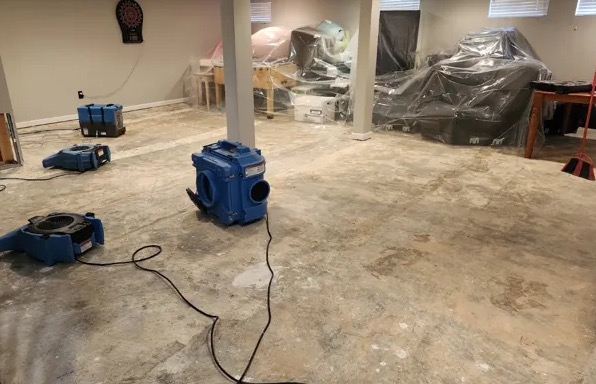
Mold Remediation Services and Mold Inspection in Wilmington
Most mold in Wilmington homes grows in the same places: bathrooms, under sinks, around windows, in attics and anywhere a leak went unnoticed.
In Wilmington, Burlington, Reading and Woburn, local mold remediation specialists remove mold after water damage, clean affected framing and dry the area so the problem does not return.
Mold Remediation Services in Wilmington
Crawl Space Mold Abatement
A musty smell inside the house can start in the crawl space. Affected joists are cleaned, damaged insulation is removed and moisture problems are noted for repair.
Black Mold Remediation
Dark mold on drywall or wood is handled the same way as any large mold patch: the area is sealed off, damaged material is removed and the framing behind it is cleaned.
Mold Odor Elimination
If a musty smell lingers after cleanup, the pros look for remaining moisture or mold in walls, carpet or ducts rather than masking it.
Air Duct Mold Cleaning
Duct mold cleaning removes buildup from ducts and registers with brushes and HEPA vacuums. Badly affected flexible duct is usually replaced rather than cleaned.
Attic Mold Removal
Attic mold often shows as dark staining on the underside of the roof deck. Affected wood is cleaned, wet insulation is removed and airflow problems are noted for repair.
How to Spot a Mold Problem in Wilmington
Allergy Symptoms Indoors
Sneezing, coughing or itchy eyes that ease when you leave the house can be a sign of mold. A doctor can tell you more.
Damp Basement or Crawl Space
A lower level that always feels damp or smells musty is a common place for mold on walls, joists and stored items.
Past Water Damage That Was Not Dried
A leak or flood that was mopped up but not dried with equipment can leave moisture in walls and floors, where mold grows later.
Musty Smell That Will Not Go Away
A damp, earthy smell often means mold is growing somewhere out of sight, such as inside a wall, under flooring or in ductwork.
How Mold Remediation Services Work in Wilmington
Step 1: Finding the Moisture Source
Mold needs water. The pros find the leak, condensation or seepage behind it so it can be fixed.
Step 2: Setting Up Containment
The work area is sealed off and air scrubbers run so spores do not spread to clean rooms.
Step 3: Black Mold Removal
Affected drywall and trim are cut out and bagged, and the wood behind them is cleaned.
Step 4: Air Filtration and Drying
Air scrubbers clean the air while dehumidifiers dry the framing and remaining materials.
Common Causes of Mold Growth in Wilmington
AC Condensation Problems
A clogged condensate drain or a cracked drain pan leaks water near the air handler, and mold grows on nearby drywall and ductwork.
Slow Plumbing Leaks
Drips under sinks, behind toilets and inside walls can go unnoticed for months, keeping wood and drywall wet enough for mold to grow.
Floods Not Fully Dried
Flooding that is mopped up without dehumidifiers and air movers leaves moisture in walls and subfloors where mold grows within days.
High Indoor Humidity
When indoor humidity stays high, moisture collects on cool surfaces like windows, closet walls and corners, and mold follows.
Residential and Commercial Mold Remediation Services in Wilmington
Residential Mold Remediation Services
Homeowners get an inspection, containment of the moldy area, removal of damaged drywall or flooring and cleaning of the framing behind it.
Commercial Mold Remediation Services
Commercial buildings get the same process at a larger scale, with containment sized to the space and air filtration to protect nearby areas.
When DIY Mold Cleanup Is Enough
Bleach does not fix mold on drywall or wood because the moisture and roots stay in the material. Porous materials with mold usually have to be removed.
What Affects Mold Remediation Services Cost in Wilmington
Mold after a flood often costs more to remove because large sections of drywall, flooring and insulation are affected.
Rebuilding After Removal
Replacing drywall, insulation and flooring after mold removal is often priced separately from the remediation itself.
Location of the Mold
Mold in attics, crawl spaces and inside walls is harder to reach and usually needs more labor than mold on an open wall.
HVAC Involvement
Mold in ducts or the air handler adds cleaning or replacement of duct sections on top of the room work.
Does Insurance Cover Mold Remediation Services?
Many policies cover mold only when it comes from a sudden, covered water event such as a burst pipe. Mold from long-term leaks or humidity is usually excluded. Check your policy.
Why Call Local Mold Remediation Specialists in Wilmington
Available Any Time
Mold after a leak or flood can be reported at any hour. The specialists can be reached day or night at (617) 682-9090.
Moisture Meters and Thermal Cameras
These tools show wet areas inside walls and under floors, which is where hidden mold usually grows.
Industry Remediation Standards
Removal follows industry standards for mold remediation: contain, remove damaged materials, clean, dry and check.
24/7 Mold Cleanup After Water Damage in Wilmington
Visible mold after a flood in Wilmington? Keep children and pets away from the area and call (617) 682-9090 for help, 24 hours a day.
Call Now (617) 682-9090Mold Remediation Services Throughout Wilmington
Other places served are listed below, each with its own page.
- Mold Remediation Services in Burlington
- Mold Remediation Services in Reading
- Mold Remediation Services in Woburn
- Mold Remediation Services in North Reading
- Mold Remediation Services in Wakefield
- Mold Remediation Services in Milton
- Mold Remediation Services in Quincy
- Mold Remediation Services in Salem
Mold Remediation Services FAQs
Will mold come back after remediation?
It can if the moisture source is not fixed. Finding and stopping the leak or humidity problem is part of the job.
What causes a musty smell in the house?
Usually mold or damp materials somewhere out of sight, such as inside walls, under carpet, in the crawl space or in ducts.
Do I need mold testing?
Not always. If mold is visible, testing often adds little. It can help when mold is suspected but cannot be seen.
Can mold grow in air ducts?
Yes, especially near the air handler where condensation collects. A musty smell when the air turns on is a common sign.
Is mold in the attic a serious problem?
It can damage roof sheathing and framing over time and usually points to a roof leak or poor ventilation that should be fixed.